GIT-1: Blockchain
overview
gap-in-technology ( G.I.T ), is a research project to find the gaps in technology, and to find the solutions for the gaps.
in this git, we will be covering the blockchain technology - the proposed, the improvements, and the suggestions.
blockchain
a revolutionary technology, as proposed in the bitcoin whitepaper, was a combination of some renowned past groundwork: cryptography + hash tree ( merkle tree ) + decentralized computation. with the power of decentralization, security of cryptography and the data management of hash tree, gave the rise of blockchain in the financial sector ( for digital transactions to be processed without any intermediaries )
with the blockchain community joining their works in the open source world, it led to the developments of more applications, on top of blockchain, giving the world a new experience with decentralization and its power.
in recent years, more developments has been seen to expand blockchain, that includes smart contracts, consensus mechanisms, tokenization, zk-rollups and many more.
gap #1: developments
on personal basis, as this sector is young ( 15 years or 131,472 hours till now ), developments are still evolving and more applications should be developed on top of blockchain. use of technology is considered to be evaluated on the basis of its new versions and implementations by the community.
most of the developers focuses on building a layered applications to shift from web2 to web3, but the main focus should be on the blockchain itself, as it is the base layer. there will be projects that will build most of the web2 applications onto blockchain, there will be a change, and the change will be the decentralization. we cannot consider this as a development but a shift.
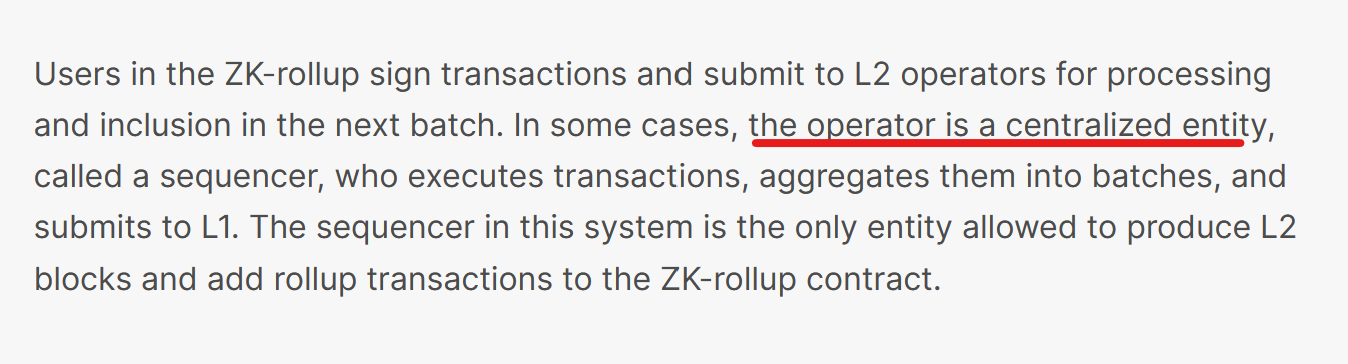
currently, zk proofs are in trend, and fewer developers are in the production. but as per my research, zk-rollups ( using zk-proofs ), still lack fully decentralization. for transactions to be validated on to the L1, execution is done by a centralized operator.
another tech stack, interoperability, with Polkadot and Cosmos focusing on fully decentralized cross-chain transactions, there is still a gap in the technology. a malicious connector, or, having centralized governance may lead to serious asset damages on each chain, this is still in its infancy.
suggestions
- implementing peer nodes on different blockchain, to achieve interoperability, and to avoid centralized governance.
- zk-rollups should be fully decentralized, and should not be dependent on a centralized operator. ( still in research )
- instead of developing on top of blockchain, expand the working of blockchain
- multi-os support
- distributed computing ( decentralized computing )
- decentralized storage
- decentralized web
gap #2: why use centralization?
with the rise of blockchain, and the power of decentralization, why do we still use centralized applications? the answer is simple, scalability. again falling back in the trilogy of scalability, security and decentralization, we have to choose two of them, and the third one will be compromised.
regulators, often consider blockchain as a threat to the financial sector, as it is not regulated, and the transactions are not traceable. however, major financial institutions are working on the blockchain technology, and are developing their own blockchain, to be used in their financial sector.
blockchain can be implemented on a centralized as well as on a decentralized network, according to the use case. the main focus here should be on the decentralization, as it is the main feature of blockchain. end users should be able to use the blockchain, without any knowledge of the technology, and should be able to use it as a normal application.
when every user runs their individual nodes to manage their own data, the decentralized state will be achieved

when every organization computes the data using a distributed network, the web3 state will be achieved

when every organization is independent of any central authority, the blockchain state will be achieved
centre actors are still considered to be the best option for scalability, but with the rise of blockchain, and the developments in the technology, we can achieve scalability with decentralization. but, the question is how?
suggestions
- use of zk-rollup, to achieve scalability with decentralization
- use of sharding, to achieve scalability with decentralization
- use of state channels, this one is my favorite, as it is the most efficient way to achieve scalability with decentralization.
gap #3: adoption
there is still a gap in the adoption of blockchain. the main reason for this is the lack of knowledge, and the lack of resources. [more on this in another article]
conclusions
with overall progress on developments, blockchain is still evolving. there are many gaps in the technology, and the community is working on it. with community engagements and the shift from web2 to web3, there will be a change in the world, and the change will be the decentralization.
note, this is a research project, and the content is focused on the blockchain technology, may not be valid in some cases. feel free to contribute to this research, and to the git, with the below links.